
How does the Conduit Principle avoid Trust Income Tax?
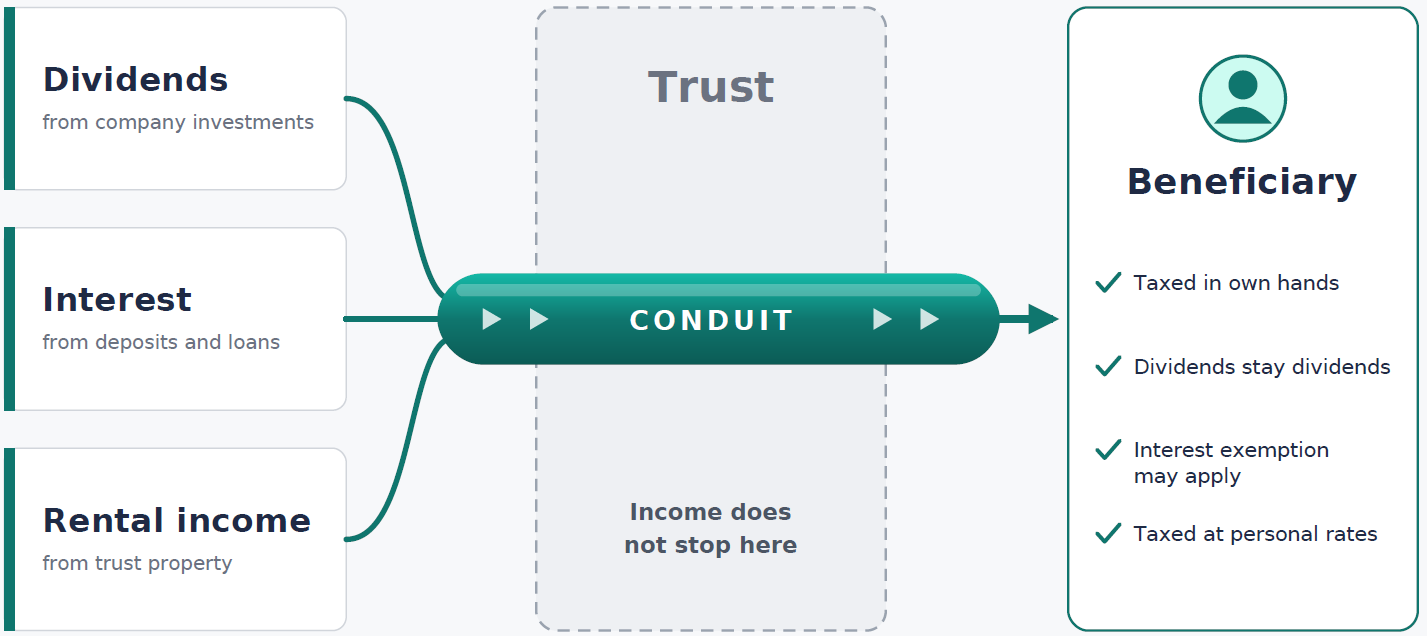
A conduit is a pipe. So, imagine a pipe going through your trust. Income received by the trust can flow though that pipe to a beneficiary without touching the trust, provided it does so before the new tax year starts. It is as if the trust was not there. So, the income stays unchanged. CGT remains CGT, taxable income remains taxable income, interest remains interest. And it is treated normally in the hands of the Beneficiary. The individual allowances still apply.
Because trusts are taxed at 45% (or 36% for Capital gains) and individual beneficiaries are normally taxed at a lower rate, this can be seen as a means of reducing tax on income received by a trust.
All well and good, but think again! The purpose of a trust is to build wealth not to distribute it. If you’re going to chuck that wealth back at the family, then why bother to have a trust in the first place?
And don’t fall for those attorney trust “specialists” who tell you “Oh, that’s OK. The beneficiary pays the tax then simply lends the after tax money back to the trust.”
They are attorneys and don’t understand money. A Chartered Accountant will tell you that when you lend money to a trust like that, you are not restoring the wealth that you extracted, because now the trust owes that money to the beneficiary. You have simply created an asset in the trust (the cash) and an equal liability (the debt). No change in wealth there!


0 comments